



Article Sidebar

Published:
Jun 27, 2026Keywords:
Article Details

This work is licensed under a Creative Commons Attribution 4.0 International License.
Main Article Content
Molecular docking analysis of Cupressus sempervirens ligands against Fusarium oxysporum pathogenic proteins
Hoceme Degaïchia

Abstract
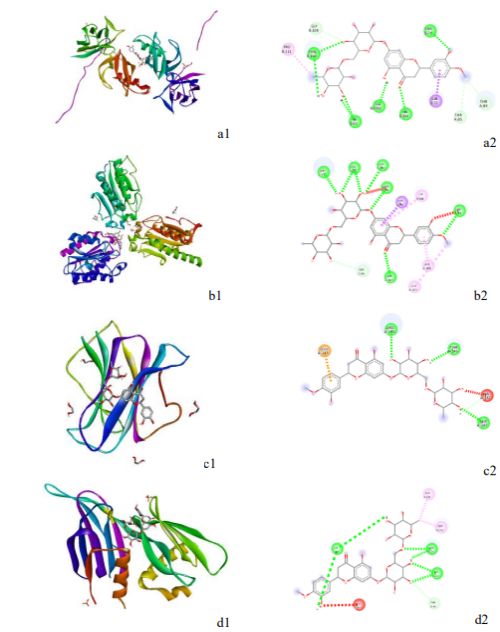
This study utilized molecular docking via AutoDock Vina to investigate the inhibitory potential of eight ligands from C. sempervirens—comprising five flavonoids and three phenolic acids—against four critical F. oxysporum pathogenic proteins: 5AJH, 7T6A, 7T69, and 5OD4. The results revealed spontaneous and stable binding interactions for all complexes, with binding affinities (ΔG) ranging from -5.2 to -9.3 kcal.mol⁻¹. Flavonoids consistently exhibited stronger affinities than phenolic acids, with Hesperidin identified as the most promising bioactive compound. Hesperidin achieved exceptional binding scores, particularly against targets 7T6A (-9.3 kcal.mol⁻¹) and 5AJH (-9.0 kcal.mol⁻¹). These in silico findings provide a robust molecular basis for previously observed in vitro antifungal efficacy. The study concludes that C. sempervirens, and specifically Hesperidin, represents a viable and eco-friendly source for developing natural bio-fungicides to manage F. oxysporum infections


