



Article Sidebar

Published:
Jul 10, 2026Keywords:
Article Details

This work is licensed under a Creative Commons Attribution 4.0 International License.
Main Article Content
Contribution to improving the propagation of cherry trees, a flagship species in agroforestry systems
Abstract
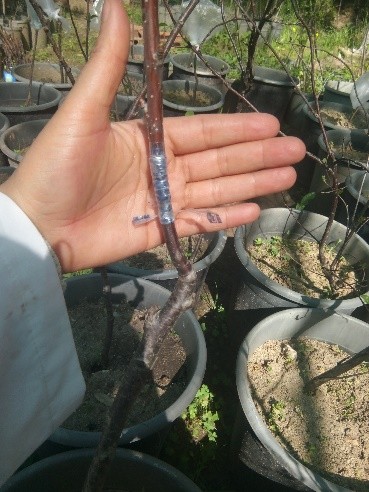
The sweet cherry (Prunus avium L.) is a species of high agronomic and agroforestry interest, whose success depends closely on vegetative propagation techniques. This work aims to evaluate the grafting ability of the cherry on two rosacea rootstocks, wild cherry (Prunus avium) and Saint Lucia (CAP 101), by comparing two grafting techniques: slit graft and patch graft. The study was conducted in a nursery under semi-controlled conditions, parameters were measured, notably the success rate, the bud break time and indicators of vegetative growth. The results show significant variability depending on the rootstock and the technique used. The slit graft showed higher recovery rates and earlier bud break than the escutcheon graft. The CAP 101 rootstock was distinguished by a better compatibility with the graft and more vigorous vegetative growth than wild cherry. These results show the importance of the choice of rootstock and grafting technique for optimizing the production of cherry tree plants and confirm the potential of this species for a sustainable integration into agroforestry systems in Tunisia


