



Article Sidebar

Published:
Jul 10, 2026Keywords:
Article Details

This work is licensed under a Creative Commons Attribution 4.0 International License.
Main Article Content
Shelf-life assessment of an orange beverage based on physicochemical, microbiological, and sensory analyses
Hoceme Degaïchia

Abstract
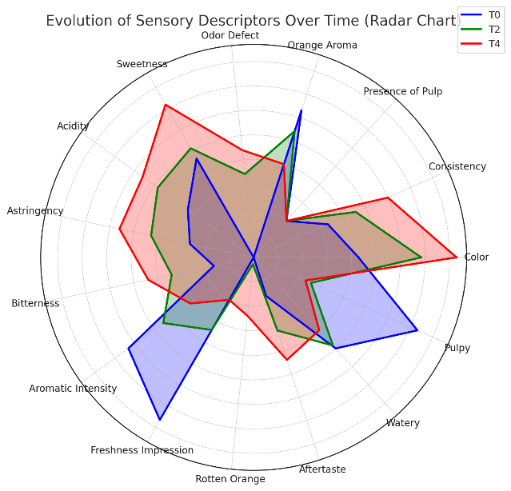
This study aimed to evaluate the physicochemical, microbiological, and sensory stability of an orange-based beverage during storage at ambient temperature. Samples were collected at different stages of production (raw materials, semi-finished, and finished products) and analyzed over a four-month period (T0–T4). Physicochemical parameters, including pH, Brix, titratable acidity, pulp content, vitamin C, phenolic compounds, color intensity, and density, were monitored. Microbiological analyses were performed according to Algerian standards, and sensory evaluation was conducted using a trained panel. The results showed that pH, Brix, and density remained relatively stable throughout storage, while significant changes were observed in titratable acidity, pulp content, vitamin C, phenolic compounds, and color intensity (p < 0.05). A marked decrease in vitamin C and phenolic compounds, along with an increase in color intensity, indicated progressive quality degradation. Microbiological analysis revealed the absence of microorganisms in the early stages; however, yeast contamination appeared after two months and increased significantly over time. Sensory evaluation demonstrated that color, aroma intensity, freshness, and pulp content were significantly affected by storage duration, whereas other attributes remained stable. In conclusion, the orange beverage exhibited satisfactory initial quality but showed significant deterioration in physicochemical, microbiological, and sensory properties during prolonged ambient storage. These findings highlight the limitations of ambient storage conditions and emphasize the need to reassess shelf-life claims and improve preservation strategies to ensure product quality and safety.


