Abyssinia Journal of Business and Social Sciences (AJBS), established by Wollo University, Ethiopia in 2016 is peer-reviewed and an open access journal that publishes high quality articles twice per year. This journal publishes original research articles, short communications and review articles in all fields of Business, Economics, Social Sciences, Law, Behavioral Sciences, Humanities and language studies. The journal is devoted to disseminate high quality papers and create common platform for researchers, practitioner and scholars all over the world to share experiences, publish articles and debate on various cross-cutting issues in Africa and the rest of the world.
Aims and Scope
Abyssinia Journal of Business and Social Sciences (AJBS), established by Wollo University, Ethiopia in 2016 is peer-reviewed and an open access journal that publishes high quality articles twice per year. This journal publishes original research articles, short communications and review articles in all fields of Business, Economics, Social Sciences, Law, Behavioural Sciences, Humanities and language studies. The journal is devoted to disseminate high quality papers and create common platform for researchers, practitioner and scholars all over the world to share experiences, publish articles and debate on various cross-cutting issues in Africa and the rest of the world. All papers submitted to this journal for publication have undergone through initial editor screening, peer review, and double anonymous review processes. Reviewers will be selected based on their publication experiences, academic standards, proximity to the particular discipline etc.
You can see this journal's website here.
African Anthropologist provides a forum for African and Africanist anthropologists, researchers, social scientists, writers, thinkers, philosophers, and artists to explore what it means to be human.
AA seeks to stimulate conversation on culture, diversity, ideas, and life processes' complex webs and fabrics while developing anthropological conceptual and theoretical frameworks and research methodologies.
AA is committed to advancing anthropological research and practice developments, initiating and sustaining multidisciplinary collaboration, and protecting human life and human rights.
Cover art: Virtud Femenina, by artist Mene Manresa Bodipo.
The African Human Mobility Review (AHMR) is an interdisciplinary peer-reviewed on-line journal created to encourage and facilitate the study of all aspects (socio-economic, political, legislative and developmental) of human mobility in Africa.
Through the publication of original research, policy discussions and evidence-based research papers, AHMR provides a comprehensive forum devoted exclusively to the analysis of contemporaneous trends, migration patterns and some of the most important migration-related issues. The journal is accessible on-line at no charge.
AHMR is jointly owned by the Scalabrini Institute for Human Mobility in Africa (SIHMA) and University of the Western Cape (UWC).
At the moment, AHMR is also accredited by the South African Department of Higher Education and Training (DHET) Journal List.
Other websites associated with this journal: https://sihma.org.za/journal
The African Journal of Alcohol and Drug Abuse (AJADA), is a publication of the National Authority for the Campaign Against Alcohol and Drug Abuse (NACADA) in Kenya. NACADA is a State Corporation established under the National Authority for the Campaign Against Alcohol and Drug Abuse Act, 2012 of the Laws of Kenya.
This is an open access, peer reviewed journal, committed to high quality output publications with an international audience seeking to disseminate reliable information on the subject of alcohol and drug abuse. AJADA contributes to new research discoveries in areas related to alcohol and drug abuse and publishes articles with a clear intention of advancing the campaign against alcohol drug abuse.
Currently, AJADA is published bi-annually both online and in print and receives manuscripts focusing on; 1. Prevention and Advocacy 2. Enforcement of alcohol and drug prevention strategies 3. Treatment and rehabilitation 4. Education, Training and Capacity building 5. Research on alcohol and drug related discoveries 6. Policy and legislation on matters relating to alcohol and drug abuse.
The journal aims to provide an avenue to exchange evidence-based information and best practices on the areas of prevention, advocacy, policy development and legislation, enforcement, treatment and rehabilitation and other aspects of relevance to alcohol and drug abuse.
Manuscripts are accepted on the basis of their quality, originality and significance to the readership and contribution to research knowledge in the field of ADA. All manuscripts will be evaluated and those deemed appropriate for publication will be peer-reviewed by at least two reviewers. Final acceptance or rejection rests with the Editorial Board.
You can see the journal's website here.
African Journal of Cross-Cultural Psychology and Sport Facilitation
The African Journal of Cross-Cultural Psychology and Sport Facilitation will take and publish empirical studies and theoretical propositions as well as case studies that are community-based and inter/intra-cultural on human behaviour, relationship in the family, workplace, schools and organisations.
The African Journal of Drug & Alcohol Studies is an international scientific journal published by the African Centre for Research and Information on Substance Abuse (CRISA). The Journal publishes original research, evaluation studies, case reports, review articles and book reviews of high scholarly standards. Papers submitted for publication may address any aspect of alcohol and drug use and dependence in Africa and among people of African descent living anywhere in the world.
African Journal of Social Issues (AJOSI) is a peer reviewed, multidisciplinary, international journal. It is a publication of the Development and Management Research Group (DMRG), a registered Professional Research Association with central focus on issues on African development and circumstances. It is a member of African Journal Online (AJOL) and Society for African Journal Editors (SAJE). It aims to be proactive in initiating and sustaining quality academic debates in social, economic, political, religious etc. development, international relations policies and management practices and theories while providing an institutional framework for the dissemination of such ideas through the publication of quality journal papers, book review and short notes, including conferences and workshops.
It welcomes papers in the fields of social sciences, humanities, management sciences and related disciplines, including but not limited to sociology, psychology, political science, anthropology, history, agriculture, development studies, population studies and demography issues, philosophy, economics, public health, education, statistics, management, law and linguistics provided their focus is on Africa and related issues.
The African Journal of Social Work (AJSW) is a refereed journal that serves as a forum for exchanging ideas and knowledge and discussing issues relevant to social work practice, education and research in the African region. The journal is committed to reflecting culturally relevant and decolonised African social work. The AJSW uses a double-blind peer review process. We ask authors to value communities that they research by being open in dealing with them, including them in the review process, providing opportunities for co-analysis and co-authoring and providing them with results of our research in accessible formats. The journal publishes empirical papers but also accepts reviews, philosophical, theoretical, historical, methodological or epistemological articles. In addition to these articles, the journal is interested in brief notes and analysis of up to 1000 words on policy, programmes, legislations, organisations or interventions on social work that would be of interest to African social workers and the international social work fraternity. Other submissions may include book reviews, media reviews, published article commentary or replies, suitable bibliographies, curriculum development or teaching aids, think pieces, news from professional associations and professional interviews.
To help with our objective of decolonizing African social work, we anticipate that authors will have a majority of their citations from the continent including African books, articles, definitions, concepts, theories, frameworks and orature (oral literature) that is abundant in Africa but has not been adequately tapped in social work.
The journal publishes articles that are accessible online free of charge and are indexed with the Department of Higher Education and Training (DHET), South Africa; Africa Journals Online; SCOPUS, Elsevier’s abstract and citation database; and several other indexing systems. To cover the open-access service, in 2021 the publishers introduced charges for authors after peer review and acceptance. This practice is widely used globally to ensure that research remains open access. Further information and the fees are available on the journal website www.ajsw.africasocialwork.net/author-guidelines/
The journal publishes 6 issues per year in February, April, June, August, October and December.
African Journal of Social Work (AJSW) content is licensed under a Creative Commons Attribution-NonCommercial 4.0 International License.
Articles should be of sustainable development interest and include full- length reports of original research not previously published elsewhere; research notes which consist of brief reports of new findings, techniques and equipment of importance to sustainable development practice. Reviews or announcement of publications, reports of various sustainable development practice agencies in Africa.
African Journal of Traditional, Complementary and Alternative Medicines
The “African Journal of Traditional, Complementary and Alternative Medicines (AJTCAM)” is a peer-reviewed, multidisciplinary, international, scientific Open Access Journal that provides publication of articles on phytomedicines, ethnomedicines and veterinary ethnomedicines. The journal is published by a Non-Governmental Organization (NGO) known as “African Traditional Herbal Medicine Supporters Initiative (ATHMSI)”. The Journal welcomes submission of manuscripts that meet the general criteria of significance and scientific excellence. Papers will be published approximately two-to-three months after acceptance
Other websites related to this journal are: https://journals.athmsi.org/index.php/ajtcam/index and the PUBMED link: https://www.ncbi.nlm.nih.gov/pmc/journals/970/
The African Quarterly Social Science Review (AQSSR) stands tall as a distinguished peer-reviewed journal, seamlessly blending intellectual exploration with an unwavering commitment to excellence. As a beacon guiding scholars, students, and educators, AQSSR offers a vibrant platform for peer-reviewed research articles and empirically driven works in the realm of social sciences. Embracing diversity in thought and methodological rigor, AQSSR fosters an environment where scholarly inquiry thrives. With a dedication to advancing knowledge and understanding, articles are welcomed on a rolling basis, ensuring a dynamic exchange of ideas and insights. By upholding the highest standards of scholarship, AQSSR continues to be a trusted resource for academics and practitioners alike, shaping discourse and driving progress in the field of social sciences across Africa and beyond.
Aims and Scope Our aim is to cultivate a dynamic environment that not only provides access to the latest literature and innovations in the social sciences but also fosters the exchange of ideas and expertise in Africa and beyond.
ASSHJ is an online international open access publication journal with a policy of an anonymous peer-reviewing process. As a double-blind academic journal, it focuses on social sciences and humanities issues and topics to benefit developed and developing countries.
ASSHJ is a quarterly journal (four times a year). Our audience is scientists, practitioners, researchers, policymakers, government agents, NGOs, professionals, academia, and many more.
Manuscripts for publication include original and unpublished research papers in the form of conceptual articles, theoretical and experiential, review articles, case reports, and empirical research papers. All the submitted manuscripts should not be under consideration or reviewed for publication in any journal anywhere. Mission To reinvigorate academic integrity and research quality. To bridge research knowledge, ideas, and innovation gap through academic publications. To expand the network of the national and international research community through publications. To provide an established platform for scholarly collaborations in a global research community. To provide the platform for research and knowledge sharing between academic researchers, consultants, and practitioners. Vision To become a household name and well-known scientific journal for social science and humanities research.
You can view this journal's own website here.
African Sociological Review / Revue Africaine de Sociologie
The African Sociological Review is a bi-annual publication of CODESRIA, Dakar, Senegal. It welcomes articles and other academic communications from scholars in Africa and elsewhere regarding issues of African and general social analysis. The Review exists in the first instance to promote the extension of sociological and anthropological thought among scholars working in Africa. Relevant work from elsewhere will however also be considered. Contributions may be in English or French. La Revue africaine de sociologie est une publication semestrielle du CODESRIA. Les articles et autres communications scientifiques d' universitaires d'Afrique et d'ailleurs sur la problématique des analyses sociales ou d'ordre général sont les bienvenus. La vocation première de la Revue est de servir de support au développement de la pensée sociologique et anthropologique au sein de la communauté des chercheurs africains. Néanmoins, toute contribution pertinente venant de l'extérieur du continent sera également prise en compte. Les articles peuvent être rédigés en anglais ou en français.Other websites related to this journal: http://www.codesria.org/spip.php?rubrique42〈=fr
AFRREV IJAH: An International Journal of Arts and Humanities
IJAH: International Journal of Arts and Humanities, is a Peer Reviewed Journal by International Association of African Researchers and Reviewers, Bahir Dar, Ethiopia and was also incorporated in Nigeria with Corporate Affairs Commission. It is a forum for research on all aspects of arts and humanities. It publishes articles, reviews and scholarly comments relating to the arts and humanities.
It focuses both on conceptual or theoretical approaches and case studies or essays demonstrating how advanced information technologies further scholarly understanding of traditional topics in the arts and humanities. The journal also welcomes submissions on policy, epistemological, and pedagogical issues insofar as they relate directly to computing-based arts and humanities research.
Publication within a short period after acceptance
About four editions in a year – (January, April, July and September)
On-line publication in advance of the printed journal.
Papers abstract/indexed by major indexing services
LALIGENS is a peer-reviewed journal by International Association of African Researchers and Reviewers (IAARR). It is published three times a year. Three topical issues are to be addressed by this journal – language, literature and gender with the following sub-headings among others:
the relationship between language and development and offers a specific proposal for addressing issues of language policy and planning in Africa and elsewhere in the world
the extinction and survival of many African languages
the role of foreign languages in African context
issues of gender portrayal in language and literature
all about feminism
the relationship between language and gender
Gender-related linguistic properties such as referential terms, word formations, syntactic structures, semantic connotations, social gender and idiomatic expressions.
The journal was founded in January 2021 to promote the theory of Conversational Thinking propounded by Jonathan O Chimakonam and other proponents, and endorsed by the Conversational Society of Philosophy. The goal is to make it a world-class academic journal, publishing high-quality articles that engage deeply with ideas centred around African philosophical, political, sociological, historical, anthropological thinking etc., with the aims of reclaiming, correcting and promoting accurate African narratives, and fostering continuous conversation, and system building in African scholarship. It aims also to create a platform where scholars in African philosophy and studies can present novel ideas, critique and converse with established ideas/ systems, and build on existing systems using the conversational method.
Conspectus is the journal of the South African Theological Seminary. The journal is fully accredited by the South African Department of Higher Education and Training. Like the Seminary, the values of the journal are encapsulated in the phrase, “Bible-based, Christ-centered and Spirit led.” Operationally, the journal is marked by four distinctives: 1. With interdisciplinary discourse being a prized research objective at SATS, the journal publishes articles from across the broad spectrum of theological studies (Biblical Studies, Practical Theology, Systematic Theology, Studies in Church and Society), as well as studies that link with extra-theological disciplines.
2. Conspectus is a Christian journal whose ethos does not divorce academic reflection and engagement from belief in God, obedience to the Scriptures, and commitment to the church. Consequently, Conspectus welcomes articles that are soundly Scriptural in perspective, approach, and content. The tone should reflect a commitment to the inspiration, authority, and relevance of Scripture, and to a theology that serves the church and honors God.[1] Publishing articles that employ reader-centered methodologies for exegesis does not lie in Conspectus’s[2] 3. Like the Seminary, Conspectusprioritizes representation and input from various nations, ethnicities, and denominations under a broadly evangelical umbrella. This is reflected in the Editorial Board, Editorial Team, Board of Referees, and the journal’s content. 4. As SATS is based on the African continent, its journal is largely representative of the Majority World—reflecting on/from and speaking into this context. Although this emphasis is apparent, this does not preclude contributions and contributors from elsewhere in the world. Conspectus is an open-access journal, meaning that the journal is made available to readers at no cost. The journal is catalogued under ATLA (American Theological Library Association), Logos Bible Software, Galaxy Software, Sabinet, the Directory of Open Access Journals (DOAJ), African Journals Online (AJOL), and is available on the SATS website. To be published in Conspectus, an article must go beyond a summary of secondary sources and present the results of sound theological research into a biblical or practical problem in a way that would be valuable to the church, including scholars, pastors, students, missionaries, or other Christian workers. You can view the journal's own websitehere.
The Contemporary Journal of African Studies, formerly published as Research Review of the Institute of African Studies (see RRIAS pages here: http://www.ajol.info/index.php/rrias/index) publishes academic and scholarly articles that set forth the findings of new research in any branch of African Studies, or discuss and re-evaluate earlier or current research or publications by an author or authors.
The journal publishes research articles that are empirical and theoretical, covering a wide range of issues relating to counselling and has broad interest for a readership comprised mostly of counsellors in educational institutions, mental health, professionals in government, private practice and community agencies. The Counsellor is the major outlet for counselling related issues in Nigeria.
Cradle of Knowledge: African Journal of Educational and Social Science Research (The)
The journal covers and not limited to: Social Science and Humanities, Sociology, Social Welfare, Law, Anthropology, Religious Studies, Visual Arts, Political, Cultural Aspects of Development, Tourism Management, Public Administration, Psychology, Philosophy, Political Science, History, Education, Women Studies, Business and Marketing, Economics, Financial Development, Accounting, Audit, Banking, Management, Human Resources etc.
Other websites associated with this journal: https://serek.or.ke/journal/index.php/AJESSR/issue/archive
Creative Artist: A Journal of Theatre and Media Studies
Dirāsāt Hispānicas is a scientific journal published by the High Institute of Humane Sciences of Tunis - University of Tunis El Manar. (e-ISSN: 2286-5977). Dirāsāt Hispānicas is an open access electronic journal, meant to be a space for study, debate, and reflection spanning the geographical areas of Spain, the Maghreb and Latin America. In order to promote multidisciplinary dialogue through a Hispanic perspective, its pages are open to original works of history, language and literature, written in Spanish, French and English. Other websites connected with this journal: https://dirasathispanicas.org/index.php/dirasathispanicas/index
ERATS is peer-reviewed and operates an open access policy aimed at Advancing Religous and Theological Studies throughout Africa. ERATS focuses on theoretical and empirical research in Religious and Theological studies. The journal welcomes the submission of manuscripts with the theoretical or empirical aspects from the following categories: African Traditional Religion, Biblical Interpretation, Biblical Translation Studies, Christian Education, Church History, Church and Society, Comparative Study of Religions, Ecocriticism, Ethics, History and Mission, Inter-religious Dialogue, New Testament, Old Testament, Pentecostal Studies, Theology, Wisdom Literature. We however accept manuscripts relating to other areas not stated above pertaining to religious and theological research.
You can view this journal's website here.
East African Journal of Education and Social Sciences
The East African Journal of Education and Social Sciences (EAJESS) is an international open access journal that publishes scholarly articles in the field of education and social sciences. The main focus for this journal is to inspire, motivate and nurture researchers from various corners of the world to search and share knowledge and insights through research and publication. The primary target audience includes researchers and practitioners in the field of education and Social Sciences. Content of manuscripts published in this journal include: Educational Administration, Curriculum and Instruction, Educational Technology, Inclusive Education, Educational Psychology, Religious Education, Supervision of Instruction, Quality Assurance in Education, Comparative Education, Issues in Primary, Secondary and Higher Education, Foundations of Education, Teaching Areas like Languages, History, Geography, Economics, Mathematics, Sciences, etc and other issues related to Education and Social Sciences.
Other websites associated with this journal: https://eajess.ac.tz/
Eastern African Journal of Humanities and Social Sciences
Emphasizing experimental and descriptive research, the Eastern AfricanJournal of Humanities and Social Sciences presents articles that examine important issues in the field of Humanities and Social Sciences. The social sciences focus on subjects like economics, psychology, geography and history, while the humanities explore philosophy, languages and literature, and the arts. This definition encompasses such fields of study as (in the humanities) history, English, philosophy, foreign languages, classics, history of art, and (in the social sciences) sociology, psychology, economics, and political science. Features:
Papers that present integrated sets of studies that address significant theoretical issues relating to humanities and social sciences.
Theoretical papers and critical reviews of current experimental and methodological interest.
Single, well-designed studies of an innovative nature.
Brief reports, including replication or null result studies of previously reported findings, or a well- designed study addressing questions of limited scope.
The Ethiopian Journal of Human Rights (EJHR) is a multidisciplinary journal published by the Center for Human Rights, Addis Ababa University (CHR, AAU). The objectives of the EJHR include the promotion of knowledge and dialogue on issues of human rights as a multidisciplinary theme. Furthermore, it envisions promoting human rights values including, but not limited to, understanding, tolerance, and participation.
All research articles published in the journal undergo rigorous peer review, based on initial editor screening and they must be original contributions that are not under consideration for any other publication. The EJHR welcomes solicited and unsolicited research articles, reviews, commentaries, decisions of courts/tribunals, opinions/notes/reflections, etc. related to human rights.
EJSS publishes scholarly works focusing on historical, socio-economic, development, cultural, gender, political and environmental issues. Contributions for the journal should include full-length original research articles, review articles, book reviews and letters.
The Journal works for the advancement and dissemination of knowledge in social sciences. It provides a platform for the research community to share their findings, insights and views in social sciences. The Journal serves as a forum of critical, constructive and problem-solving research and knowledge creation.
Aims and Scope The Ethiopian Renaissance Journal of Social Sciences and Humanities (ERJSSH) aims to disseminate high-quality research in selected fields of the social sciences and humanities. The journal promotes multidisciplinary research and scholarship that address real-world issues. The editorial team is committed to publishing relevant and emerging scholarship that contributes to both theoretical and practical advancements in the social and human sciences. ERJSSH accepts original research from diverse disciplines, including but not limited to: anthropology, sociology, geography, history, international relations, linguistics, music/film studies, political science, psychology, social work, language, media studies, and women and gender studies.
Feminist Africa is a continental gender studies journal produced by the community of feminist scholars. It provides a platform for intellectual and activist research, dialogue and strategy. Feminist Africa attends to the complex and diverse dynamics of creativity and resistance that have emerged in postcolonial Africa, and the manner in which these are shaped by the shifting global geopolitical configurations of power. Feminist Africa provides a forum for progressive, cutting-edge gender research and feminist dialogue focused on the continent. By prioritising intellectual rigor, the journal seeks to challenge the technocratic fragmentation resulting from donor-driven and narrowly developmentalist work on gender in Africa. It also encourages innovation in terms of style and subject-matter as well as design and lay-out. It promotes dialogue by stimulating experimentation as well as new ways of engaging with text for readers.
You can view this journal's website here.
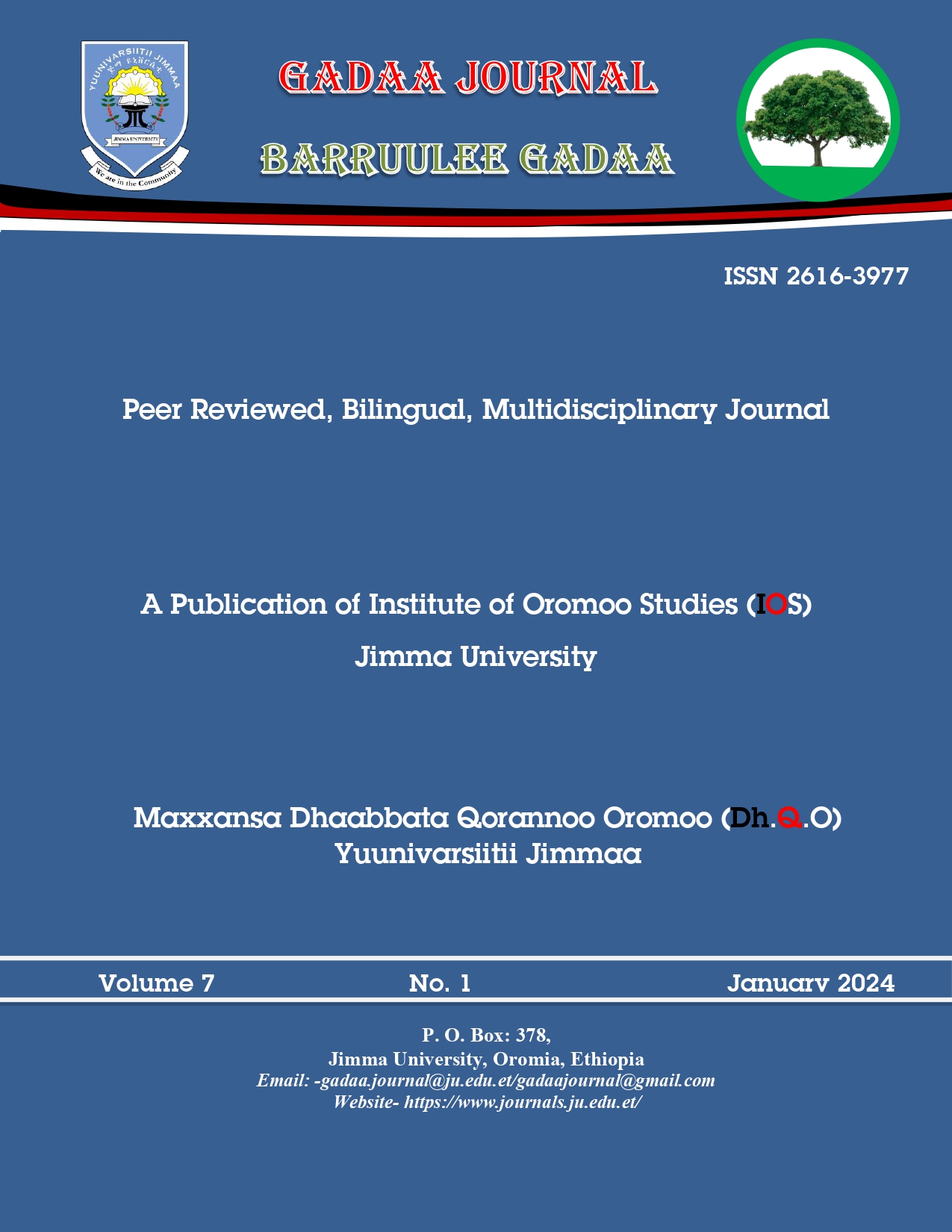
Gadaa Journal is an open access, peer reviewed, multidisciplinary bilingual journal (online and print version) published biannually by the Institute of Oromoo Studies (IOS) in Jimma University. It is a double blind, peer reviewed, open access, refereed Journal aspiring to have a brand value among the world’s multidisciplinary journals. The journal publishes original, multidisciplinary, scientific (theoretical and empirical) research in all fields of studies focusing on Oromoo and accepts articles that address aspects of the totality of Oromoo life in space and time.
This includes multidisciplinary research works pertinent to, but not limited to, Oromoo language, culture, philosophy, history, folklore, literature, arts, humanities, indigenous life systems and practices, environment, administrative and governance systems, economy, education, and science and technology. The forms of contributions the journal entertains include original research, review articles, book reviews, and short communications. These contributions should pass through the peer review process to be published on the journal.
Gender and Behaviour is an interdisciplinary journal dedicated to articles, that reflect psychological and behavioural aspects of gender in general. Gender and Behaviour welcomes scholarly manuscripts from authors all over the world on a wide array of subjects concerning psychological and behavioural aspects of gender in general.
Global Africa aims to be the echo of the new voices of African research of excellence in the humanities and social sciences. Its objective is to significantly increase the African contribution to global scientific creation, and to arouse critical reflexivity to strengthen the epistemological, theoretical, methodological and ethical foundations of research in the humanities and social sciences (HSS).
Aims andScope
Global Africa is a pan-African, international journal, dedicated to the expression, dissemination and promotion of excellent research in the humanities and social sciences on the African continent and its diaspora. It welcomes reflections on global issues and their challenges apprehended from Africa and its diasporas to show how the transformations of the world are played out from the continent.
Led by Gaston Berger University of Saint-Louis (UGB) through its Interdisciplinary Laboratory on Social Sciences (LASPAD) in partnership with a consortium of thirteen pan-African, African and European research institutions, the journal aims to contribute to contemporary debates both within and beyond the academic sphere, in which African issues intersect with global issues. It is particularly interested in current and future transitions, whether economic, energy, demographic, digital, health, ecological, technological, urban, based on multi/interdisciplinary approaches.
Global Africa Publishes regular and thematic issues four times a year including expert viewpoints on current event and book recensions.
The journal is distributed with articles in HTML and PDF formats. The entire editorial process of the journal is subject to compliance with its Ethical Charter. Each participant in the process (editors, authors, reviewers, translators) is deemed to be aware of it and is required to comply.
HAKI Journal of Human Rights is an annual peer-reviewed academic journal that seeks to provide researchers, scholars and human rights practitioners with a platform for engaging in human rights theory, practice and advocacy.
The journal’s general aim is to broaden the study and practice of human rights by fostering a critical re-examination of existing approaches from an Afrocentric perspective through discussions on themes on the universal theory and practice of human rights.The Journal invites analytically rigorous papers, articles, comments on cases, legislation, policies and book reviews pertaining to various themes in Human Rights in Kenya.
Other websites associated with this journal: http://uonjournals.uonbi.ac.ke/ojs/index.php/hakijhr/index
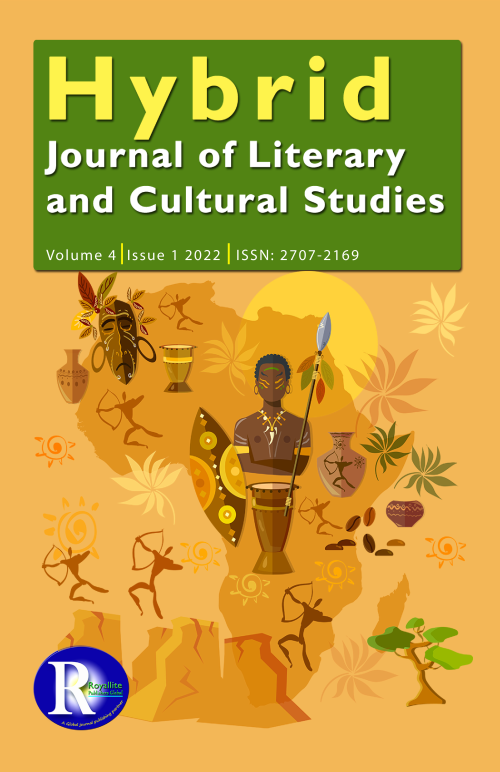
Part of Royallite Global, Hybrid Journal of Literary and Cultural Studies is a leading interdisciplinary peer-reviewed journal that publishes original research works across the breadths of Literatures and Cultural Studies. The journal has a mission to make research and knowledge accessible to all; authors, therefore, benefit from high visibility and readership for their work. The journal's broad aims and scope allow researchers to explore interconnected subject areas. Each article on this particular issue has been evaluated on its own scholarly merit and research integrity, and our expert academic editors take an objective and constructive approach to peer review.
Other websites associated with this journal: https://www.royalliteglobal.com/hybrid-literary Publication office: Muthaiga Business Centre, 1st Floor, Left Wing, Muthaiga Estate, Pangani Junction, along Thika Road, Nairobi, Kenya
Indilinga: African Journal of Indigenous Knowledge Systems
Welcome to Indilinga: African Journal of Indigenous Knowledge Systems (IAJIKS). The name Indilinga: stands for the "circular orientation" of indigenous African communities which is exhibited in their material culture and behaviour. The journal has been motivated by the need for a dependable expression for critical and analytical writing on issues related to production, dissemination and recognition of Indigenous Knowledge Systems. IAJIKS represents a variety of cross disciplinary interests in ethno-methodology and in qualitative methods. Debates on methodology, epistemology, ethics, gender, education, science and technology, arts, food systems and social-cultural issues are invited.
Focus and Scope Inkanyiso deliberately embraces epistemologies of the Global South as part and parcel of its geo-politics of knowledge vis-à-vis the problematic epistemologies of the Global North. This posture finds concrete expression in the contributions received. The journal takes seriously the indigenous epistemologies, ontologies, as well as historical and socio-economic realities of its immediate communities. The intellectual project of the journal strives to privilege epistemologies of the Global South and indigenous African knowledge by systematically blending decolonial, postcolonial, Afrocentric and Afro-sensed grammars and vocabularies of change in ways that are non-fundamentalist, non-nativist and non-faddist. Given that African thought is inherently polyvocal, reflexive, responsive and dynamic, the central focus on African thought is informed by an ecology of pluralistic perspectives and ontologies across space and time. The Journal has its own website here: https://inkanyisojournal.org/index.php/ink
The principal purpose of the journal is to publish scholarly work in a wide range of development issues namely; International Relations, Multilateral and Bilateral Diplomacy, International Trade and Investment, Geopolitical issues, Local and International Conflict Management, and Post Conflict Reconstruction, Peacekeeping and Peace Building, Diaspora and Remittances for Development, Civil-Military Relations, Terrorism and Counter-Terrorism, Small Arms and light weapons, Human Security Issues, Human Trafficking and Drug Addiction, Economic, Cultural and Conference Diplomacy, Tourism, Cross Border Issues, Regional Cooperation, Strategic Negotiations and Mediation Skills, Refugees Issues and Forced Migrations, Diplomatic Communication Skills, Globalizations issues (sovereignty, sea and air space invasion and territorial integrity), Gender issues (human trafficking, refugees, peacebuilding and effects of war), Global crises (Climate change, Food Security, Human Security and Environment Diplomacy).
You can view this journal's website here.
International Journal of Community Research (IJCR) [ISSN: 2315 – 6562; E-ISSN: 2384 - 6828] is a peer reviewed journal publication of Anthonio Research Center. IJCR publishes research articles, review articles, short reports and commentaries that are community-based or inter and intra-cultural based. IJCR also accepts manuscripts on family/human relationship, human behavior, public health, politics, and conflict resolution.Other websites related to this journal: www.anrescentpub.com
International Journal of Emotional Psychology and Sport Ethics
The International Journal of Emotional Psychology and Sport Ethics will consider empirical studies as well as theoretical propositions and case summaries on human emotions and/or feelings, family issues, battery/battering, disabilities, problem of underachievement/learning-difficulties, intellectual disabilities, behaviour disorders, psychosomatic conditions, issues in sports and regulations and health.
Some recent rigorous studies in anthropological research begin to provide new conclusions against some classic questionable considerations and /or show increasing tendency to do some syntheses of multidisciplinary data. The revelation of these two events marks the birth of a modern anthropology. The principal aim of this journal is to contribute to the development of this modern anthropology.
Another website related to this open access journal: www.ata.org.tn
Italian Studies in Southern Africa/Studi d'Italianistica nell'Africa Australe
The journal aims at providing a forum for academic discussion on all aspects of Italian culture. It features articles on Italian language and literature and, since it is one of the primary aims of the journal to foster multi- and inter-disciplinary study and communication, contributions are invited from all writers interested in Italian culture, irrespective of their specific disciplines. Contributions also of a less theoretical nature which provide an insight into Italian culture, especially as it manifests itself in Southern Africa, also receive attention. Since 2010 the journal has been also accredited by the Australian Research Council and added to the ERA list.Please note: As of November 2017 the printed version of this joural is going to be discontinued and the online version will be OA with a 2-year embargo on all articles.
Jarida la Chama cha Lugha na Fasihi ya Kiswahili Tanzania (CHALUFAKITA)
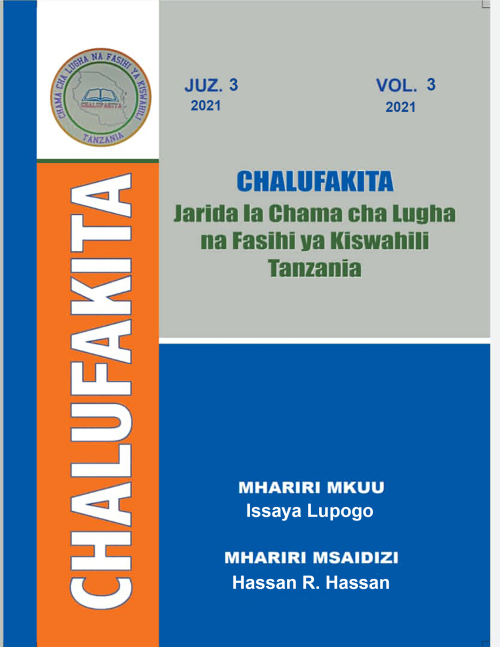
Jarida la Chama cha Lugha na Fasihi ya Kiswahili Tanzania (CHALUFAKITA) linamilikiwa na chama hicho ambacho makao makuu yake ni Dodoma,Tanzania. Jarida la CHALUFAKITA lilianzishwa na kusajiliwa tarehe 18/01/2018. Hili ni jarida la kimataifa linalochapisha makala zake mara moja kwa mwaka. Jarida linapatikana katika nakala ngumu pamoja na nakala tepe/mkondoni. Jarida hili limesajiliwa pia na African Journals Online (AJOL). Lengo la Jarida ni kuendeleza na kudumisha lugha ya Kiswahili na utamaduni wa Waswahili. Pia, linalenga kuwajengea uwezo wanataaluma katika kufanya tafiti na kuandika makala mbalimbali zitakazochangia maarifa mapya katika nyuga mbalimbali za lugha ya Kiswahili. Kwa hiyo, tunakaribisha makala kutoka pande zote za dunia zinazohusu Isimu ya Kiswahili, fasihi ya Kiswahili na utamaduni wa Mswahili.
Chama cha Lugha na Fasihi ya Kiswahili Tanzania (CHALUFAKITA) Journal is owned by the stated association which is based in Tanzania; and its headquarter is in Dodoma region. CHALUFAKITA is an international journal which publishes its articles once a year. The Journal can be accessed online and a hard copy is also available. The Journal has also been registered on African Journals Online (AJOL). The main objective of CHALUFAKITA Journal is to develop and promote Kiswahili language and the Swahili culture. The Journal provides an avenue to scholars to undertake research and publish diverse papers that will contribute to knowledge in various disciplines. Therefore, we invite scholars from all parts of the world to contribute scholarly papers which address Kiswahili language in all categories: linguistics, sociolinguistics, literature and culture.
Other websites associated with this journal: https://chaukidu.org/chalufakita
The Journal for Islamic Studies is a peer-reviewed journal committed to the publication of original research on Islam as culture and civilization. It particularly welcomes work of an interdisciplinary nature that brings together history, religion, politics, culture and law. The Journal has a special focus on Islam in Africa, and on contemporary Islamic Thought. Contributions that display theoretical rigour, especially work that link the particularities of Islamic discourse to the enterprise of knowledge and critique in the humanities and social sciences, will find JIS to be receptive to such submissions.
The mission of the Journal of Agricultural Extension is to publish conceptual papers and empirical research that tests, extends, or builds agricultural extension theory and contributes to the practice of extension worldwide. Focus and Scope
The Journal of Agricultural Extension (JAE) is devoted to the advancement of knowledge of agricultural extension services and practice through the publication of original and empirically based research, focusing on; extension administration and supervision, programme planning, monitoring and evaluation, diffusion and adoption of innovations; extension communication models and strategies; extension research and methodological issues; nutrition extension; extension youth programme; women-in-agriculture; extension, marginalized and vulnerable groups, Climate Change and the environment, farm and produce security, ICT, innovation systems. JAE will normally not publish articles based on research covering very small geographic area (town community and local government areas/council/counties) that cannot feed into policy, except they present critical insights into new and emerging issues is agricultural extension and rural development.
The Journal of Consumer Sciences is an official publication of the South African Association of Family Ecology and Consumer Sciences (SAAFECS).
The Journal of Consumer Sciences (JCS) publishes articles that focus on consumer experiences in different places and from different perspectives and methodological positions. The journal will consider research from within the fields of hospitality, consumer studies, consumer science, home economics, family studies, consumer education, consumer rights, and consumer behaviour. We also consider household and/or individual food security to be a facet of food consumerism and hence those working in this field should consider publishing in this journal. The journal also welcomes current consumer-related research that examines the impact of environmental, community, and sustainability issues.
The Journal of Cultural Studies was established in 1999 as an independent tool for research development in Africa. It is published by the Nigerian Group for the Study of African Cultures (NIGSAC), a non-profit organisation which focuses on cultural and development issues in Africa. The journal aims to explore the varied socio-cultural experiences of the African peoples through various academic disciplines.
The *Journal of Family and Society Research* (JFSR) is a biannual, multidisciplinary, peer-reviewed journal published by the Association for Family and Society Scientists (AFASS), with its head office located in the Department of Home Science and Management, University of Nigeria, Nsukka. Aims and Scope
JFSR provides a credible platform for the dissemination of rigorous research addressing family dynamics within broader social, cultural, economic, and policy contexts. Drawing from diverse fields such as sociology, psychology, social work, public health, economics, education, and related disciplines, the journal covers a wide range of topics including Family and Consumer Science, gender studies, nutrition science and education, clothing and textiles, culture and religion, technology, safety and security, politics and governance, environmental and ecological studies, occupational health, human development, child care and education, mental health, and aging. JFSR welcomes high-quality original research using qualitative, quantitative, mixed-method, and post-human approaches, as well as critical reviews, policy analyses, and book reviews, and is designed to serve researchers, university and college academics, family counselors, policymakers, and education professionals.
You can see this journal's own website here
The Journal of History and Diplomatic Studies journal includes papers that focus specifically on developments in Africa and/or the continent’s relations with the outside world. All articles must, however, make fresh and original contribution to knowledge and the journal will consider well-researched articles on any aspects of History and Diplomatic/International studies.
The Journal of Humanities and Social Sciences (JHSS) is an interdisciplinary international journal devoted to the study of matters related to the various disciplines in Humanities and Social Sciences. The main aim of the journal is to gather and disseminate under a single cover a wide variety of research and discussion of fundamental concerns to all those scholars who have an interest in humanities and social sciences.
Aims and Scope
The Journal of Humanities and Social Sciences (JHSS) at the Dar es Salaam University College of Education (University of Dar es Salaam) is an interdisciplinary referred journal that disseminates original research works, scientific review works, and proposals for methodological shifts in these fields: anthropology, development studies, economics, fine arts, gender studies, general linguistics, geography, history, language studies, language in education, literary studies, performing arts, philosophy, political science, public administration, and sociology. The journal seeks to publish high-quality creations and innovations of the theoretical frameworks in the disciplines mentioned.
AJOL is a Non Profit Organisation that cannot function without donations.
AJOL and the millions of African and international researchers who rely on our free services are deeply grateful for your contribution.
AJOL is annually audited and was also independently assessed in 2019 by E&Y.
Your donation is guaranteed to directly contribute to Africans sharing their research output with a global readership.
Once off donations here:
For annual AJOL Supporter contributions, please view our Supporters page.
Tell us what you think and showcase the impact of your research!
Please take 5 minutes to contribute to our survey so that we can better understand the contribution that African research makes to global and African development challenges. Share your feedback to help us make sure that AJOL's services support and amplify the voices of researchers like you.
CC-BY-SA African Journals Online (AJOL), with the exception of 3rd party content (3rd party content includes inter alia all journal content accessible on or via AJOL. Re-use or sharing of AJOL-hosted journal abstracts and full text articles is not nor has ever been legally permitted unless the journal/s' and/or article/s' displayed copyright and/or license explicitly permits it, or without specific written direct permission from journal/s and/or their publishing entity/ies and/or article author/s if the author/s hold copyright)
African Journals Online (RF) S.A. Non Profit Company (NPC) Registration Number: 2005/033363/08


 By Category
 By Country